
Process documentation
You need this before an automation project, before a reorganization, or before handing significant work to an LLM. And you probably don’t have it.
“But we’ve already mapped our processes!”
You may already have process documentation, maybe even in one of the global standard notations. The problem is rarely that it’s missing. The problem is that it is complete enough for experienced teams, those that can fill the gaps from memory, but not accurate and detailed enough for a system integrator or LLM.
This forces the integrator to block your people’s time to find out what’s missing. And the LLM fills the gaps with its own logic, giving you something that sounds right, but describes no company in particular.
How we solve this
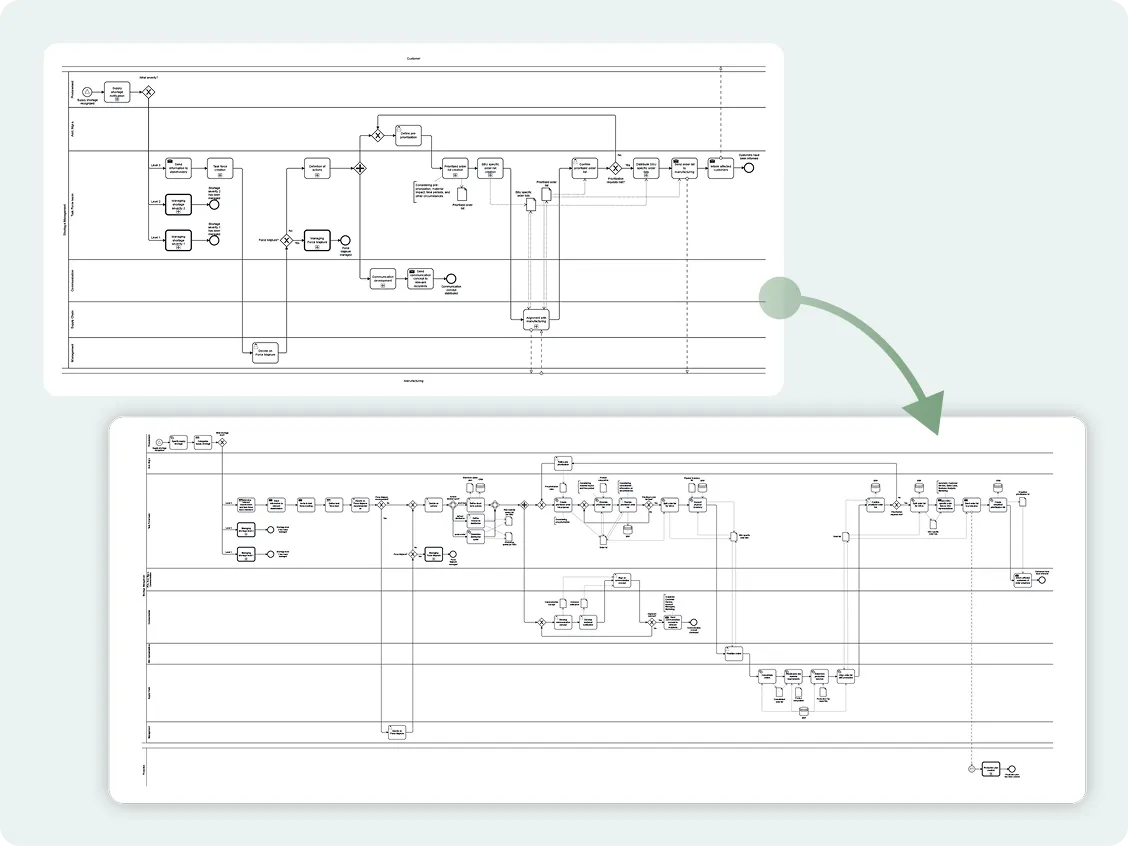
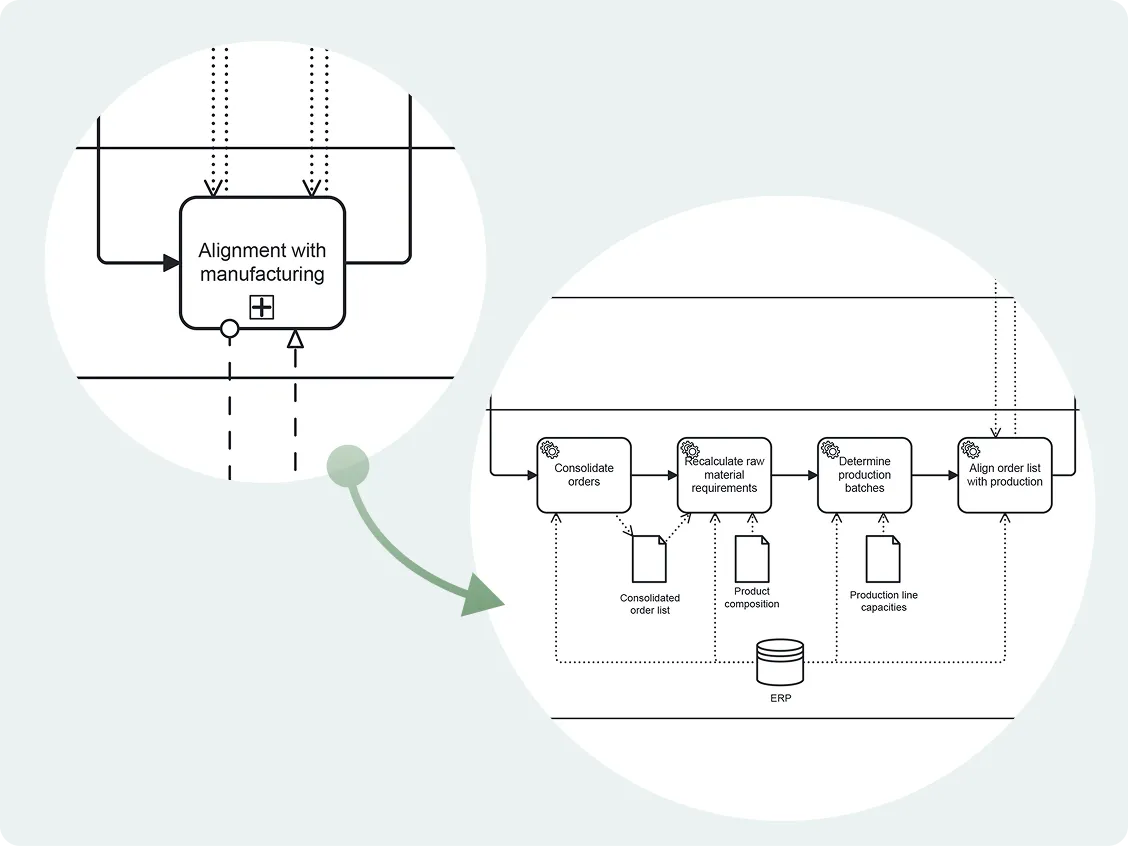
We sit with the people who do the work and document its real sequence – every task, decision, handoff, and workaround – in BPMN 2.0, a standardized notation your teams can read and your software can execute.
Initial mapping
Basic detail level
The first few sessions have created and refined a top level process overview.
Mapping iterations
Advanced detail
In subsequent calls we go into detail and add operational logic and variants.
Mapping iteration
Final detail level
In the final calls we complete the roles, systems and data involved in the tasks.
Outcome
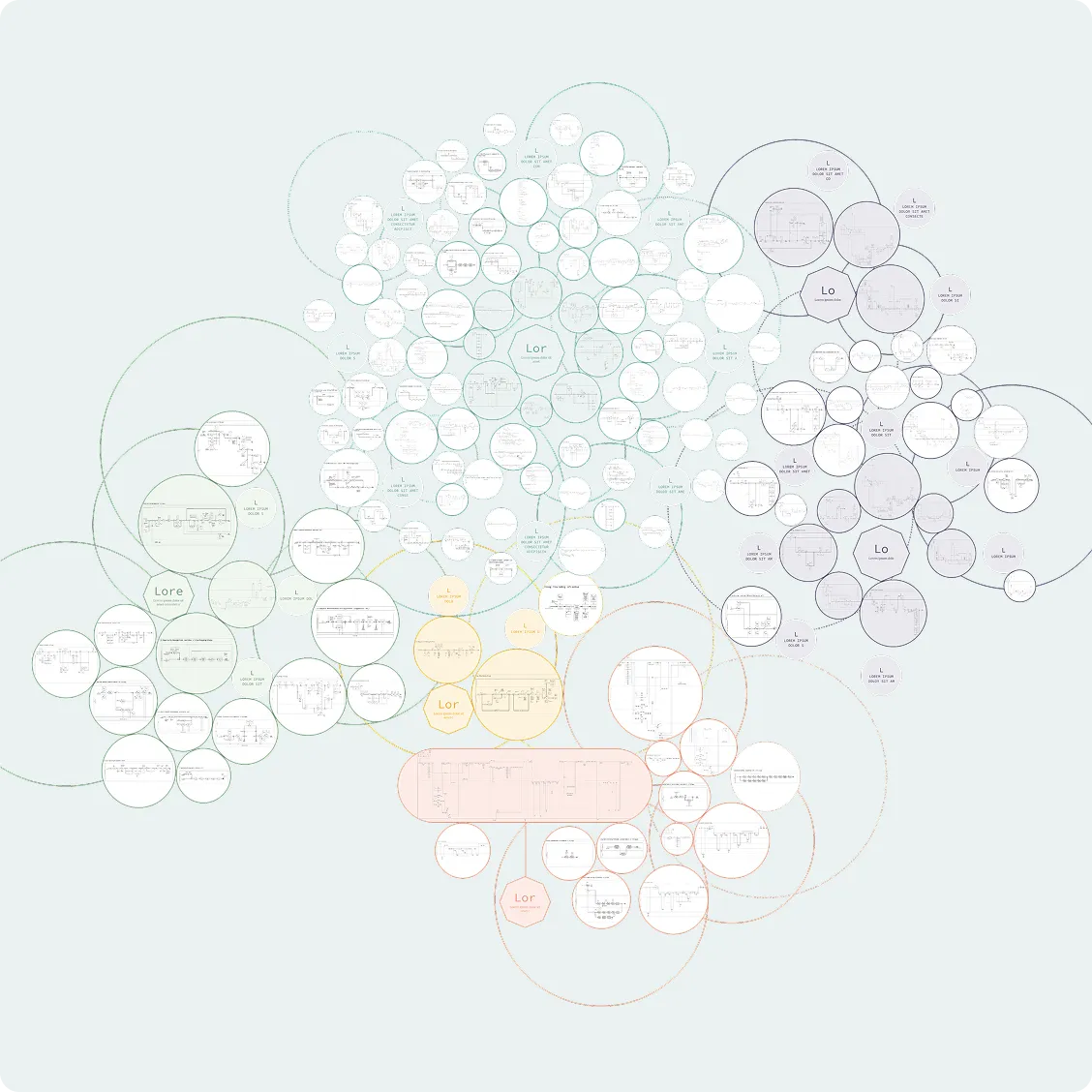
What this gives you is not a compliance document, but operational infrastructure. A full, true, living map of how your organization really operates. Like really, really.
Optimized on paper, ignored on Monday? Not with us.
A process can be mapped in full detail, signed off by everyone in the room, and “optimized” down to the last gateway – and still never get used, because it doesn’t fit how your teams actually run their day.
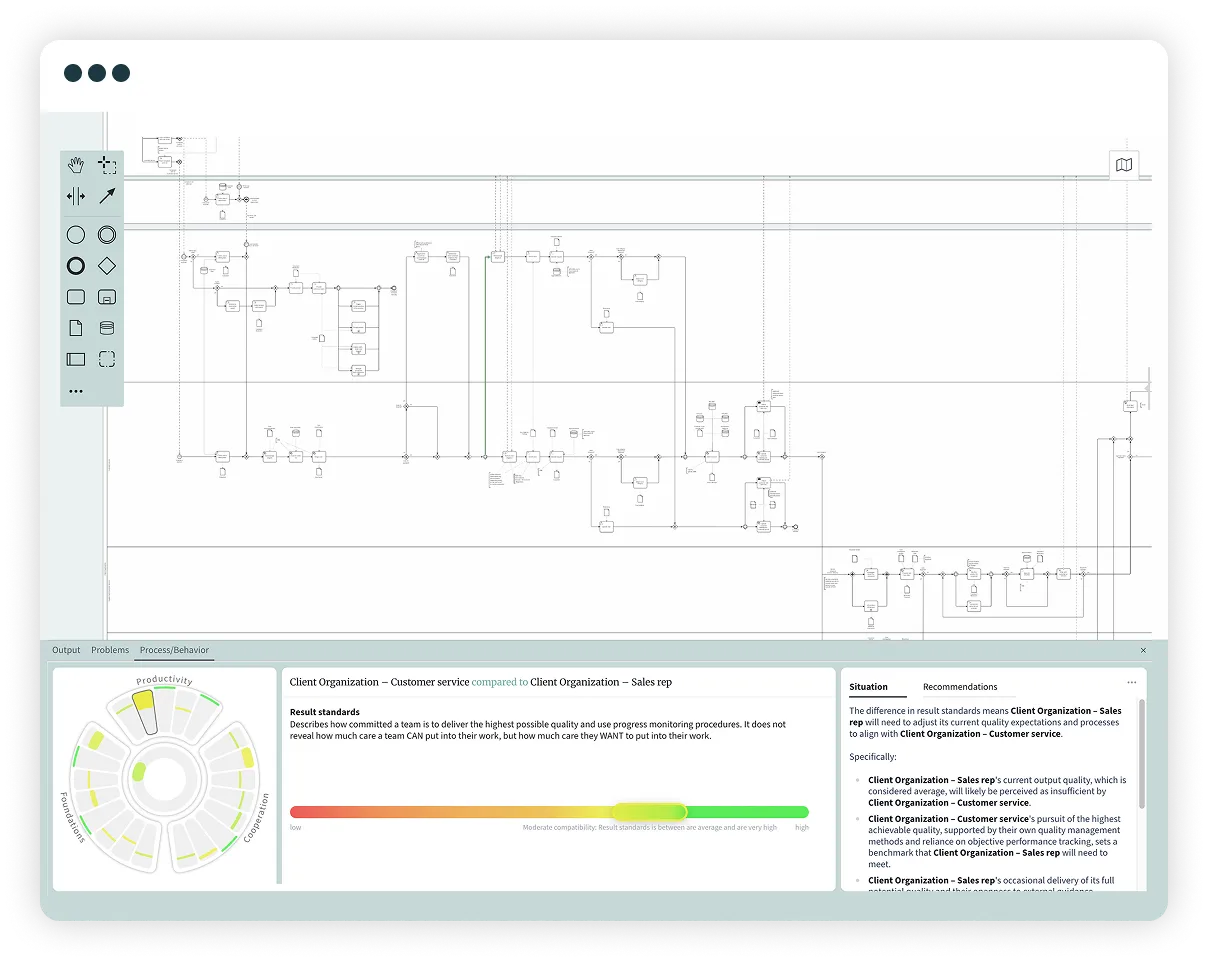
This is where the sociological data earns its place. While we map, we hold each process against how the teams meant to run it actually work, and intervene right there – before it hardens into a diagram nobody follows.
How does this impact everyday ops?
A new hire finds the process map on day two instead of spending two weeks tracking down the person who knows. Your teams can see what happens to their work after a handover, and begin tailoring it to that. Automation becomes possible: underneath the diagram is structured code your systems can execute directly, making the process drive the software rather than baking the process into it.
And when you hand work to an LLM, it operates on the documented reality of how your organization actually runs. The difference is between a colleague who has been here two years and a very articulate stranger who arrived this morning.
In process mapping, it matters who runs the room. Half the work is notation. The other half is getting a stressed, tired team to say what they actually know rather than what can be agreed on by five o’clock. Most practitioners are trained for the first half. We are great at the second.